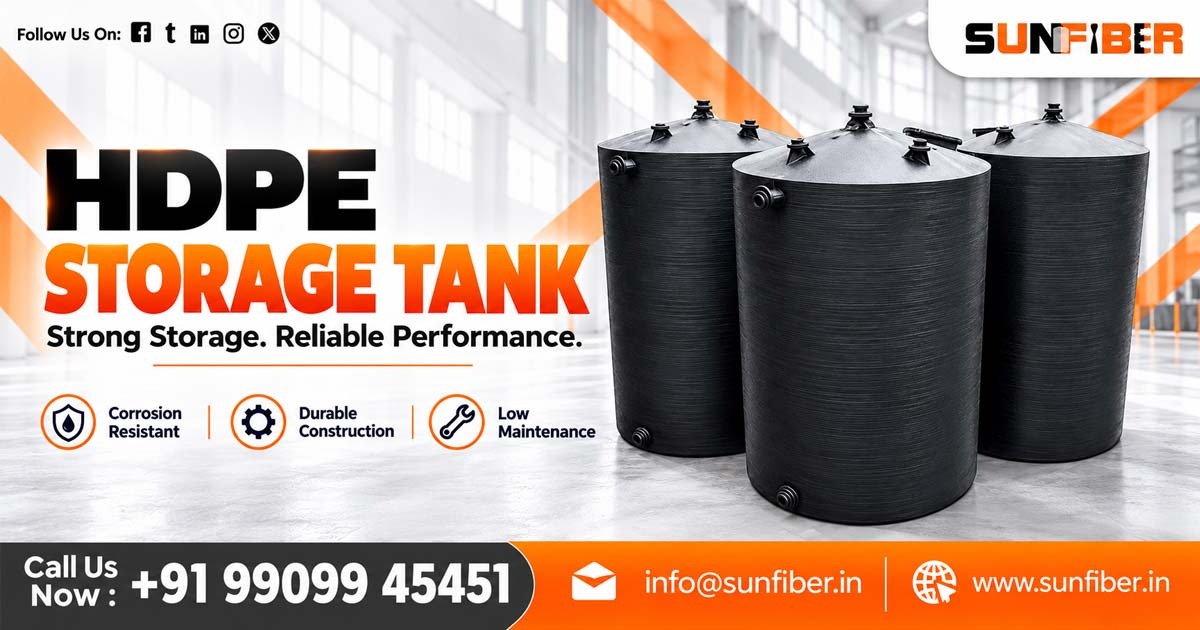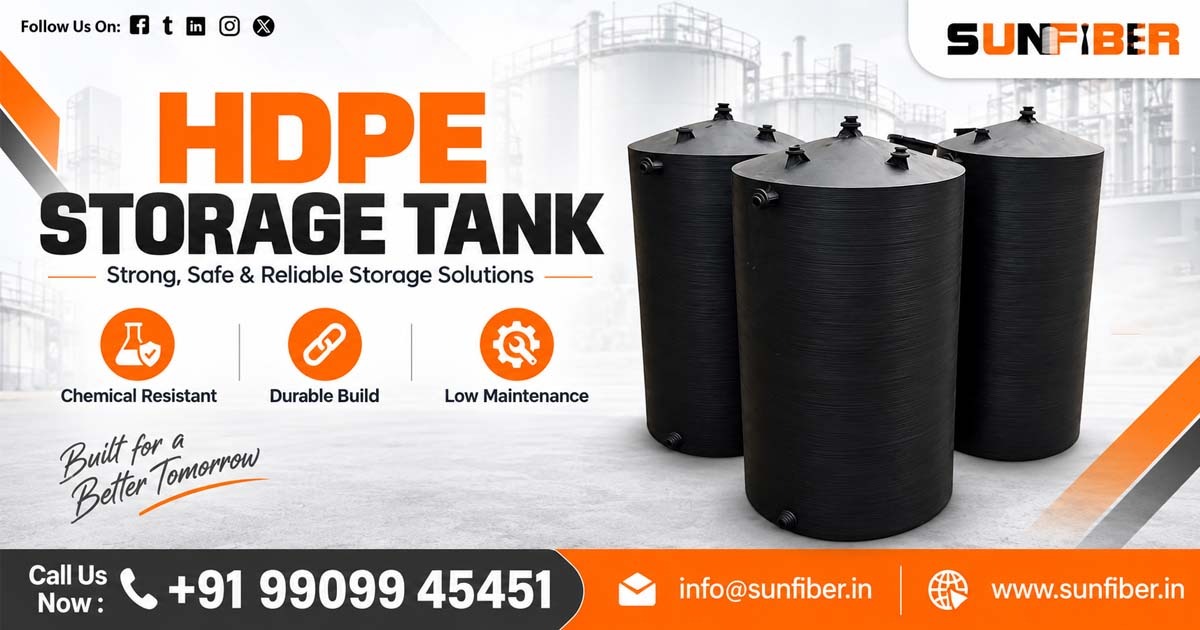
Industries needing dependable liquid storage can work with an HDPE Storage Tank Supplier In Sikkim for suitable capacity and material selection. Sunfiber, with manufacturing support from Ahmedabad, Gujarat, India, helps customers plan practical storage requirements.
Choosing the Right HDPE Tank for Industrial Storage
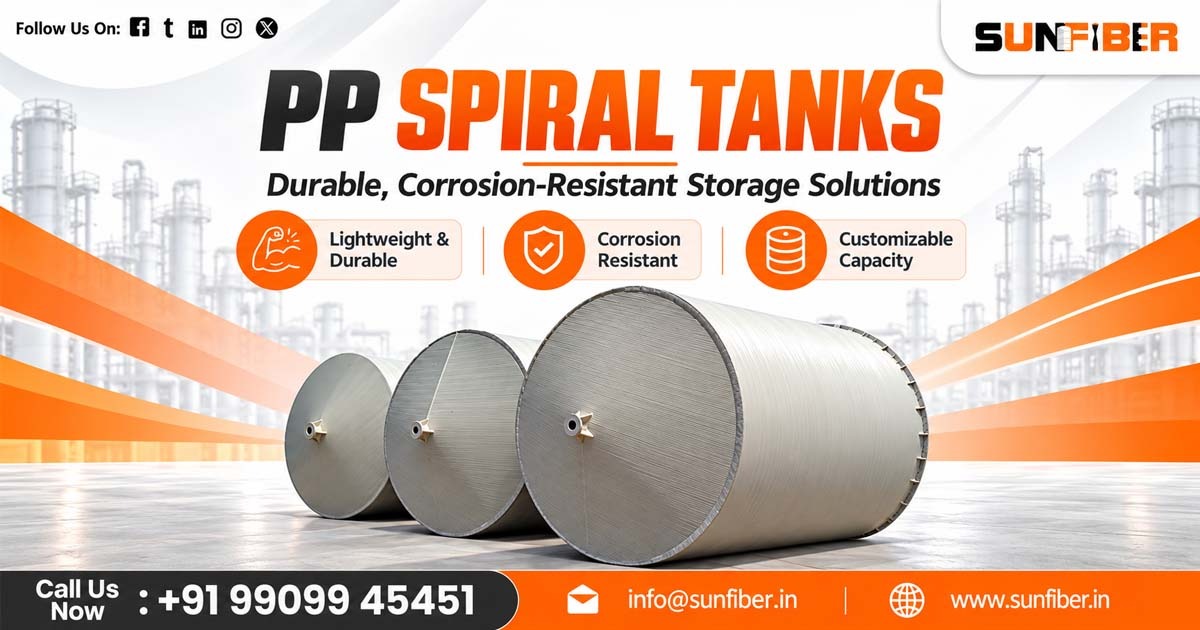
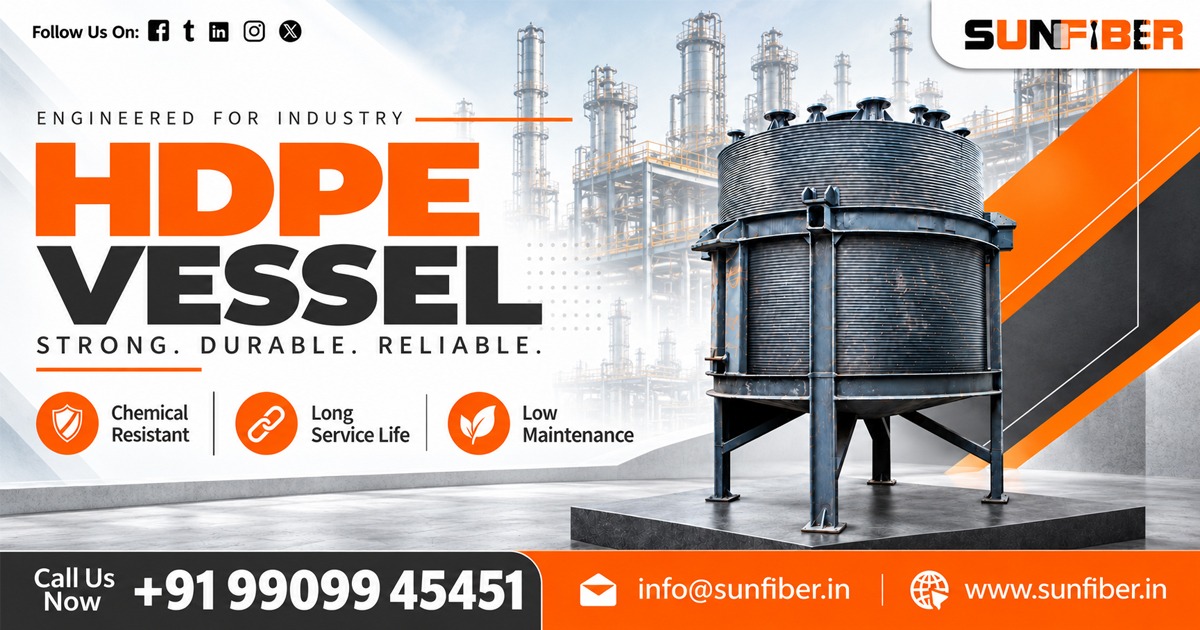
HDPE storage tanks are used for storing water and other liquids that are compatible with polyethylene. Their selection depends on the liquid being stored, required capacity, installation environment, and operating conditions.
For businesses in Sikkim, the tank should be selected according to the actual storage requirement rather than capacity alone. A properly planned tank can support organized material handling and reduce avoidable storage-related problems.
Before ordering, customers should clarify:
- Type and characteristics of the liquid
- Required storage capacity
- Available installation area
- Indoor or outdoor placement
- Inlet and outlet requirements
- Frequency of filling and discharge
- Cleaning and inspection access
- Future storage requirements
Key Points for Selecting the Appropriate Tank
A storage tank should match both the process and the site. The following factors can help buyers compare available options:
| Selection Factor | What to Check |
| Capacity | Daily consumption, batch size and reserve requirement |
| Material | Compatibility with the stored liquid |
| Location | Available floor area and installation conditions |
| Connections | Required inlet, outlet, drain and overflow arrangements |
| Operating Conditions | Temperature and handling environment |
| Maintenance | Accessibility for cleaning and inspection |
| Future Needs | Possible increase in storage demand |
Selecting an oversized or undersized tank without considering the process can create unnecessary space or handling challenges.
Installation and Operation: What Buyers Should Plan
Correct installation is important for safe and practical tank operation. The installation area should provide a stable, properly prepared support surface and enough clearance for inspection and maintenance.
Step 1: Prepare the Site
Confirm the foundation or support area, accessibility, drainage, and available space before the tank arrives.
Step 2: Position the Tank
Place the tank on the prepared support surface without subjecting it to uneven loading or unnecessary mechanical stress.
Step 3: Connect the System
Install inlet, outlet, drain, overflow and other required connections according to the planned process arrangement.
Step 4: Check Before Regular Use
Inspect connections and fittings, introduce the liquid gradually, and check for leakage or installation-related issues before normal operation.
Routine inspection should include the tank body, fittings, connections, support area and surrounding installation conditions.
Quality Checks Before Placing an Order
When evaluating an HDPE Storage Tank Supplier In Sikkim, buyers should look beyond price and confirm whether the proposed tank matches their actual requirements.
Important checks include:
- Material suitability for the intended liquid
- Correct tank capacity and dimensions
- Consistent manufacturing quality
- Properly finished connections and fittings
- Compatibility with the installation arrangement
- Inspection or testing information where applicable
- Product documentation and commercial details
- Delivery schedule and transportation planning
- Installation guidance, when required
- Availability of technical and after-sales assistance
A supplier should be able to understand the application before recommending a storage solution.
Maintenance Practices for Longer Service Life
Regular maintenance helps identify issues before they affect storage operations. A simple inspection routine can include:
- Checking the tank surface for visible damage
- Inspecting inlet, outlet and drain connections
- Looking for leakage around fittings
- Keeping the surrounding area clean
- Cleaning the tank according to the stored liquid and operating requirement
- Avoiding unsuitable chemicals or cleaning methods
- Checking the support surface periodically
Maintenance frequency should be based on the stored material, usage pattern and site conditions.
Services
- Product consultation and storage requirement assessment
- Capacity and configuration guidance
- Installation planning and technical assistance
- After-sales support and requirement coordination
LOCATION
Industrial and commercial requirements for liquid storage can arise across Sikkim, including Gangtok, Namchi, Gyalshing, Mangan, Singtam, Rangpo, Jorethang, Ravangla, Soreng, Pakyong, Chungthang, Lachung, Lachen, Pelling, Yuksom, Temi Tarku, Rhenock, Rongli, Dikchu, Tadong, Deorali, Majitar, Naya Bazar, and Rhenock. Selecting storage equipment according to local site conditions, accessibility, available space, and the intended liquid can help businesses plan their storage infrastructure more effectively.
Why Choose Sunfiber
Sunfiber supports customers in understanding storage requirements and selecting a suitable tank configuration for their application. The company can assist with capacity considerations, product requirements, project coordination, and technical discussions.
With manufacturing support from Ahmedabad, Gujarat, India, Sunfiber can coordinate industrial storage requirements while serving customers looking for solutions in Sikkim. Customers can also explore the company’s product information through the Sunfiber website.
FAQ
Q: How do I select the right HDPE tank capacity?
A: Consider daily or batch liquid requirements, reserve storage needs, filling frequency, available space, and possible future demand before finalizing capacity.
Q: Can an HDPE tank be installed outdoors?
A: Outdoor installation depends on the tank design, site conditions, support arrangement, and environmental exposure. The installation plan should be reviewed with the supplier beforehand.
Q: What should I check before connecting a storage tank?
A: Verify the support surface, tank position, connection sizes, inlet and outlet arrangement, drainage, accessibility, and compatibility with the stored liquid.
Q: How should an HDPE storage tank be maintained?
A: Regularly inspect the tank body, fittings, connections, support area and cleanliness. Cleaning procedures should be appropriate for the stored liquid and tank material.
Conclusion
Choosing an HDPE Storage Tank Supplier In Sikkim requires attention to capacity, liquid compatibility, installation space, connections, maintenance, and service support. With practical requirement assessment and manufacturing support from Ahmedabad, Gujarat, India, Sunfiber can assist customers with suitable storage planning.
Contact Sunfiber for storage tank selection, project requirements, and technical assistance.
Phone: +91 99099 45451
Email: info@sunfiber.in
Feel free to contact us for more information and inquiries.
View Product: Click Here