When selecting an HDPE scrubber for an industrial exhaust system, chemical compatibility alone is not enough. Buyers in Uttarakhand should also evaluate gas composition, operating temperature, pressure drop, and packing requirements before finalizing a supplier or equipment configuration.
1. Why Gas Composition Matters More Than the Scrubber Material Alone
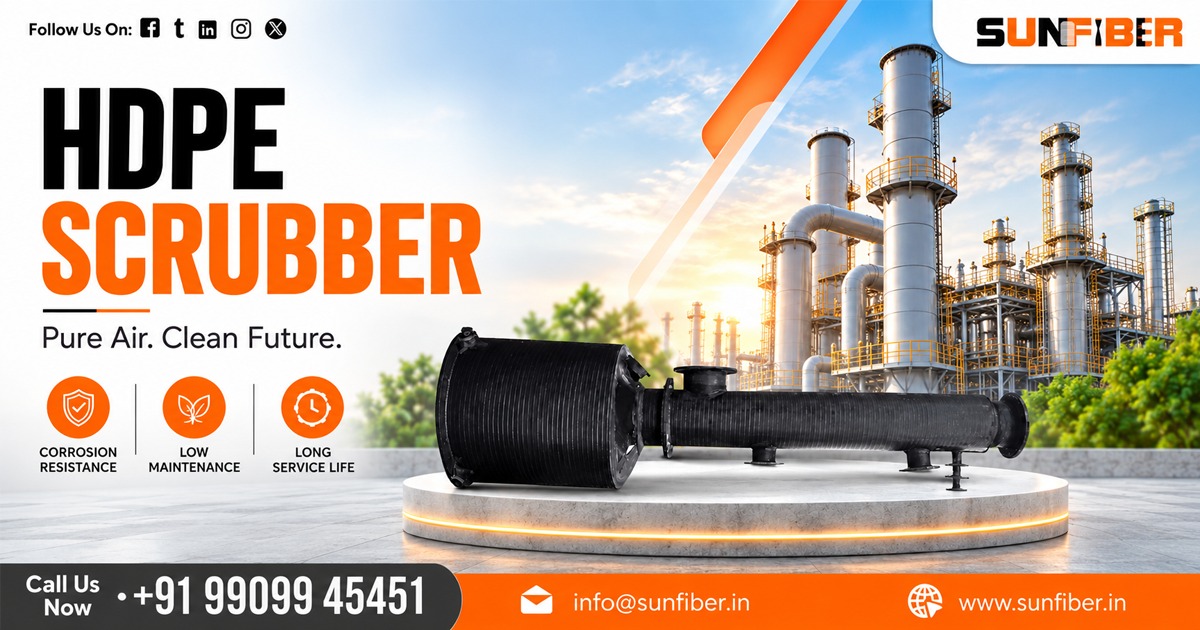
An HDPE scrubber is a gas-treatment unit that uses a scrubbing liquid to capture or neutralize selected contaminants from an exhaust stream. HDPE (high-density polyethylene) is used for its chemical resistance against many substances, but its suitability depends on the actual operating conditions.
Before choosing an HDPE scrubber supplier in Uttarakhand, identify the contaminants entering the system. Acidic fumes, alkaline gases, soluble vapours, and particulate-laden exhaust streams may require different treatment arrangements.
The initial assessment should establish:
- Gas composition: Identify the contaminants and their concentrations.
- Temperature: Confirm normal and maximum gas temperatures against the material’s allowable operating limits.
- Moisture and chemistry: Check whether the gas and scrubbing liquid are compatible with the proposed materials.
- Required outlet quality: Define the required exhaust condition and applicable emission limits.
A scrubber that is chemically compatible with one contaminant may not automatically be suitable for a mixed gas stream.
2. How the Scrubbing Process Influences Equipment Selection
In a typical wet scrubber, contaminated gas contacts a scrubbing liquid inside a treatment chamber. Depending on the design, spray nozzles, packing media, or other contact arrangements help increase interaction between the gas and liquid.
The liquid absorbs or reacts with selected contaminants before the treated gas exits the unit. The spent liquid may require recirculation, chemical dosing, monitoring, or controlled treatment before disposal.
Three design considerations deserve particular attention:
- Gas–liquid contact: Contact area and distribution influence how effectively the target contaminant transfers into the liquid.
- Liquid circulation: The required flow depends on the contaminant, gas load, scrubbing chemistry, and equipment design.
- Pressure drop: Internal components create resistance to gas flow, which affects the exhaust fan’s duty and energy requirements.
Buyers should request a process description explaining how the proposed configuration addresses their specific exhaust conditions rather than relying on the term “HDPE scrubber” alone.
3. Which Operating Measurements Should Be Defined Before Ordering?
A scrubber’s performance depends on more than its vessel dimensions. The gas flow, liquid circulation, contaminant loading, and pressure differential must be considered together.
The US Environmental Protection Agency identifies pressure differential, scrubbing-liquid flow, and liquid outlet concentration as important indicators for monitoring wet-scrubber operation.
Before approving a design, ask the supplier to clarify:
- Gas flow rate: The expected operating flow and any variation during production.
- Pressure drop: The anticipated resistance through the proposed scrubber and its effect on fan selection.
- Liquid flow and chemistry: The required circulation rate and suitable scrubbing solution.
- Mist elimination: How liquid droplets are separated from the treated exhaust.
- Operating range: The normal and maximum temperature, pressure, and contaminant load covered by the design.
These details help engineering and procurement teams evaluate whether different quotations offer genuinely comparable equipment.
4. Is HDPE Suitable for Your Chemical Exhaust Conditions?
HDPE is resistant to many chemicals, but it should not be treated as universally resistant to every chemical mixture or operating temperature.
The buyer should evaluate the complete chemical environment, including the gas stream, scrubbing liquid, dissolved contaminants, and cleaning chemicals. Temperature, concentration, exposure duration, and mechanical loading can influence material suitability.
Sunfiber lists HDPE/PP spiral scrubbers alongside PP/FRP scrubbers in its product range.
When discussing an HDPE Scrubber Supplier In Uttarakhand, request clarification on:
- The proposed construction material and its compatibility with the process chemicals.
- The allowable operating temperature for the specific construction.
- The suitability of nozzles, packing supports, ducts, flanges, and other wetted components.
- Whether the application requires a different material or a different scrubber arrangement.
Technical insight: Material compatibility and gas-treatment efficiency are separate questions. A vessel may resist the process chemicals while the overall system still fails to achieve the required contaminant removal.
5. A Practical Example: Planning a Scrubber for Acidic Fumes
Consider a hypothetical chemical-processing unit in Uttarakhand that needs to treat acidic fumes from a production operation.
The purchasing team initially requests a scrubber based on exhaust duct diameter and available floor space. However, the process engineer identifies additional information that must be established before the equipment is finalized.
The team documents the gas flow, acid composition, operating temperature, expected production variations, required outlet quality, and available scrubbing-liquid utilities.
With these details, the supplier can assess the appropriate vessel arrangement, liquid distribution, mist elimination, and associated equipment. The team can then compare proposals against the same operating requirements.
This example illustrates why a defined process requirement should precede the equipment quotation. It does not represent a completed customer project or a guaranteed treatment result.
6. What Should Be Included in the Scrubber Quotation?
An equipment quotation is useful only when its scope is clear. Two proposals with similar prices may cover substantially different systems.
Ask the supplier to distinguish between the scrubber vessel and any additional equipment included in the offer.
| Quotation item | What to confirm |
| Vessel construction | Material, dimensions, and design conditions |
| Internal components | Packing, spray arrangements, supports, and mist eliminator, as applicable |
| Liquid-handling equipment | Tank, pump, piping, and circulation requirements |
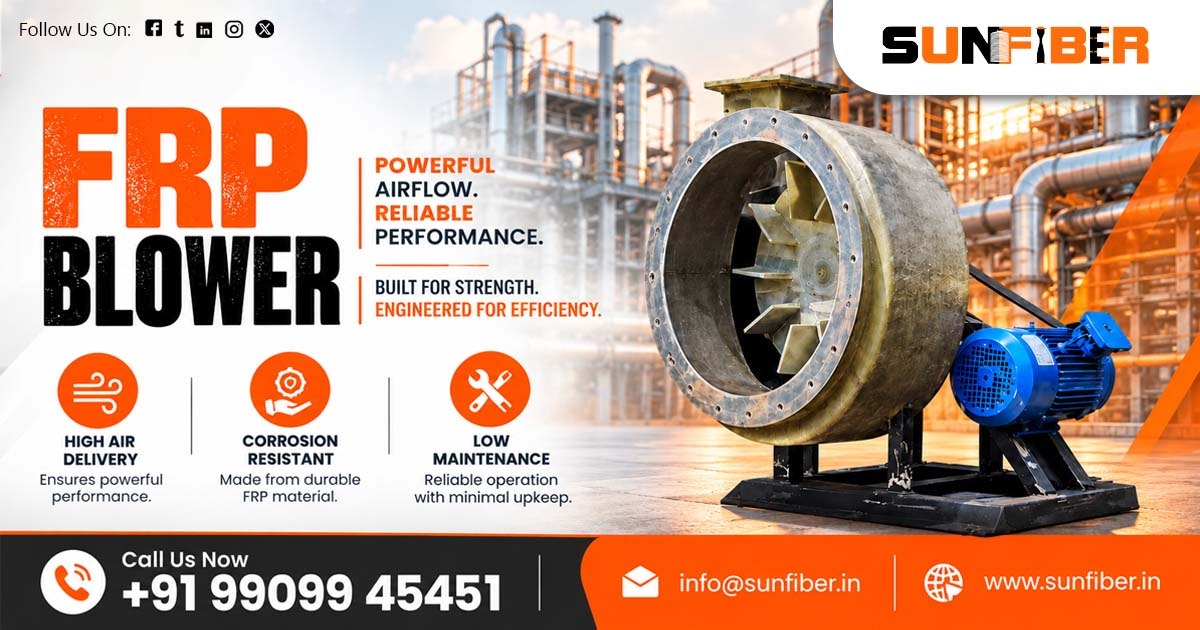
| Air-handling equipment | Blower or exhaust fan scope and design duty |
| Technical documents | General arrangement drawing, connection details, and operating requirements |
| Project scope | Delivery, installation responsibilities, commissioning, and exclusions |
Sunfiber’s published scrubber information describes systems that can include the scrubber, tank, blower, and PP pump. Confirm which components are included in the specific quotation rather than assuming that every package contains all of them.
7. Buyer Checklist Before Placing the Order
Use this checklist when evaluating an HDPE Scrubber Supplier In Uttarakhand.
- Provide the gas composition, flow rate, temperature, and expected operating variations.
- Identify the required contaminant removal and applicable emission limits.
- Confirm chemical compatibility for the vessel and all relevant wetted components.
- Review the proposed liquid circulation, pressure drop, blower duty, and mist-elimination arrangement.
- Obtain a written equipment scope, technical drawing, and list of included and excluded components.
- Clarify installation responsibilities, inspection access, maintenance requirements, delivery arrangements, and post-sale support.
If the system will connect to an existing production line, share the current duct dimensions, fan details, available utilities, and site constraints before approving the final arrangement.
8. Regional Procurement Planning for Uttarakhand Industries
Industrial buyers should coordinate equipment selection with the site’s exhaust-treatment requirements, installation access, transport route, and project schedule.
For projects in Uttarakhand, confirm the delivery location, unloading arrangements, access for positioning the vessel, utility availability, and who will coordinate installation. A supplier based outside the state may still be considered, but logistics and technical coordination should be agreed upon before ordering.
Relevant industrial and business locations include Haridwar, Roorkee, Bhagwanpur, SIDCUL Haridwar, Pantnagar, Rudrapur, Kashipur, Sitarganj, Kotdwar, Dehradun, Selaqui, Vikasnagar, Rishikesh, Doiwala, Haldwani, Ramnagar, Lalkuan, Kichha, Bazpur, Jaspur, Pauri, Srinagar Garhwal, Nainital, Almora, and Pithoragarh.
This list identifies potential regional sourcing and project-planning locations; it does not imply that Sunfiber has a branch or confirmed customer site in each location.
9. Services and Technical Support
The following support areas can be discussed with Sunfiber when requesting a scrubber quotation. Confirm the exact scope for your project.
1. Scrubber Requirement Assessment — Share gas composition, flow rate, temperature, and treatment objectives for technical review.
2. Material and Configuration Discussion — Discuss HDPE, PP, or FRP construction options according to process conditions.
3. Equipment Package Coordination — Clarify requirements for the scrubber, tank, pump, blower, ducts, and associated components.
4. Installation and Maintenance Planning — Confirm site preparation, access for inspection, maintenance requirements, and installation responsibilities.
10. About Sunfiber and Its Manufacturing Support
Sunfiber manufactures industrial equipment, including HDPE/PP spiral scrubbers, PP/FRP scrubbers, blowers, tanks, and fabricated plastic components. Its published website identifies its manufacturing location in Ahmedabad, Gujarat, India, and describes industrial applications involving chemical processing, pharmaceuticals, textiles, and other industries.
Businesses looking for an HDPE Scrubber Supplier In Uttarakhand can visit the official website, sunfiber.in, to review the product range and discuss their exhaust-treatment requirements.
The final equipment selection should be based on the process data, chemical compatibility, required treatment performance, and agreed project scope rather than location or material name alone.
11. Frequently Asked Questions
1. What information is required to obtain an HDPE scrubber quotation?
Provide the gas composition, flow rate, temperature, operating pressure, target contaminants, required outlet quality, and available installation space. These details help the supplier assess the appropriate configuration.
2. Can an HDPE scrubber handle multiple chemical fumes?
Potentially, depending on the gases involved and the treatment chemistry. The supplier should assess the complete gas mixture, operating conditions, material compatibility, and whether multiple treatment stages are necessary.
3. What affects the price of an industrial HDPE scrubber?
Price depends on vessel dimensions, construction material, internal components, gas-treatment requirements, and the scope of associated equipment. Pumps, tanks, blowers, instrumentation, transport, and installation can also affect the total project cost.
4. How can a buyer evaluate scrubber performance after installation?
Establish baseline operating parameters and monitor pressure differential, liquid circulation, and relevant liquid chemistry. Where required, verify exhaust quality through suitable testing to determine whether the system meets its specified treatment objectives.
12. Conclusion
Selecting an industrial scrubber requires a clear understanding of the exhaust stream, treatment objective, material compatibility, and operating limits. Buyers should compare complete technical proposals rather than vessel dimensions or purchase prices alone. A well-defined requirement helps Sunfiber and the project team discuss a suitable configuration for the intended application.
Visit sunfiber.in to discuss your industrial scrubber requirements, request product details, and clarify the technical scope for your Uttarakhand project.
Phone: +91 99099 45451
Email: info@sunfiber.in
Feel free to contact us for more information and inquiries.
View Product: Click Here