Introduction
Selecting an HDPE tanker involves more than comparing capacity and price. Buyers in Assam should assess the stored liquid, tanker dimensions, operating temperature, transport conditions, and discharge requirements before finalising a suitable configuration.
1. Start With the Liquid and Its Intended Use
An HDPE tanker is made from high-density polyethylene, a thermoplastic material used in industrial liquid storage and handling. Its suitability depends on the liquid being handled and the tank’s design.
Before approaching an HDPE Tanker Supplier In Assam, identify the intended application:
– Water storage or transportation.
– Chemical handling and process operations.
– Fertiliser and agricultural liquid storage.
– Industrial liquid transfer between process stages.
Chemical compatibility is particularly important. HDPE can resist many corrosive substances, but suitability depends on the specific chemical, concentration, temperature, and exposure conditions. Never assume that every HDPE grade is suitable for every liquid.
2. Why Tanker Design Matters More Than Capacity Alone
Two tankers with the same nominal capacity may not be suitable for the same operating conditions. Their shape, wall construction, support arrangement, openings, and outlet positions can differ.
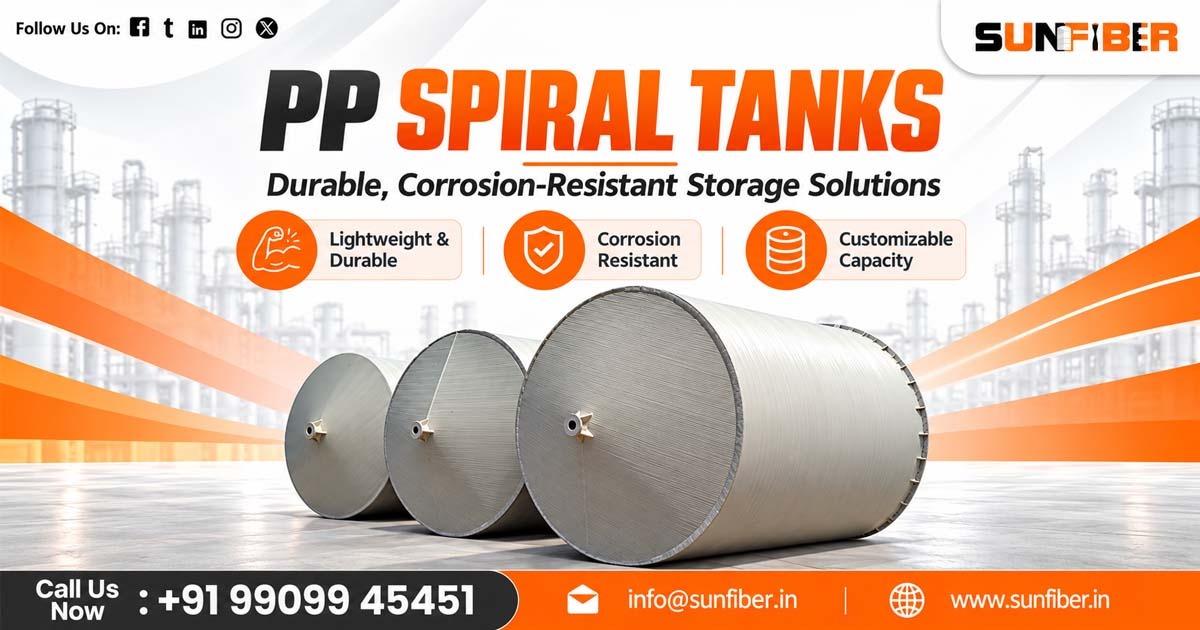
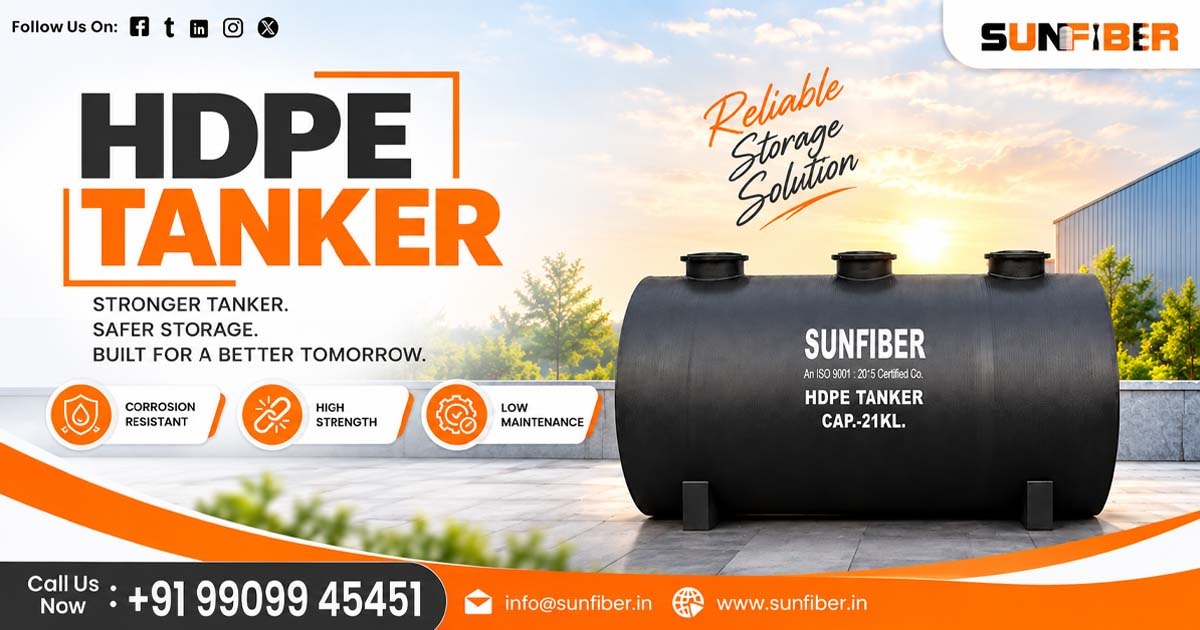
Sunfiber’s published product range includes HDPE spiral tanks and tanker configurations. Its website describes spiral winding as a manufacturing process in which extruded polymer strips are fused layer by layer to form the tank body.
When reviewing a quotation, clarify:
– Capacity: Confirm the required usable volume, not just the nominal capacity.
– Dimensions: Check available installation space and transport clearances.
– Wall construction: Ask how the design accommodates the liquid’s density and operating temperature.
– Connections: Specify inlet, outlet, drain, vent, and inspection openings as required.
– Support: Confirm the base and mounting arrangement for the intended installation.
These details help prevent a capacity-based purchasing decision from overlooking essential operating requirements.
3. Account for Assam’s Transport and Installation Conditions
Industrial projects across Assam may involve different road access conditions, site layouts, and distances between the delivery point and the installation area. These factors should be considered before the tanker is manufactured or dispatched.
Measure access gates, unloading space, turning areas, and the available lifting equipment. If the tanker is intended for vehicle-mounted transport, confirm that the design is specifically suitable for transport loads, movement, braking forces, and liquid movement during travel.
A stationary storage tank and a road-going tanker should not be treated as interchangeable designs.
4. Check Temperature, Chemical Exposure and Outdoor Placement
HDPE performance depends on the material grade and actual service conditions. Liquid temperature, chemical exposure, sunlight, and mechanical loading can influence long-term suitability.
For an outdoor installation, ask whether the proposed material and design are appropriate for the expected exposure. For chemical service, provide the supplier with the exact chemical name, concentration, and normal and maximum operating temperatures.
Also clarify whether the equipment will operate under atmospheric pressure or vacuum. A standard storage tanker must not be assumed suitable for pressurised or vacuum service without an appropriate engineered design.
5. A Practical Example: Matching the Tanker to the Job
Consider a hypothetical chemical-processing unit in Assam that needs to store and transfer a liquid between two production stages.
The buyer initially compares suppliers based on capacity and price. However, the liquid’s concentration, temperature, outlet position, and available installation space may be more important to the final selection.
If the outlet is positioned incorrectly, additional piping or layout changes may be needed. If the material is incompatible with the chemical, the equipment may deteriorate prematurely.
The better approach is to prepare a clear duty specification before requesting quotations from an HDPE Tanker Supplier In Assam.
6. What Should Procurement Teams Confirm Before Ordering?
Use this checklist to prepare a more accurate purchase enquiry.
- Identify the liquid, chemical concentration, and operating temperature.
- Confirm whether the tanker is stationary, vehicle-mounted, or intended for another handling arrangement.
- Specify the required capacity, dimensions, outlet position, and connection sizes.
- Request material compatibility information and relevant technical drawings.
- Confirm loading, unloading, delivery access, and installation requirements.
- Clarify inspection, maintenance, warranty, and after-sales arrangements with the supplier.
A detailed enquiry helps suppliers understand the actual application and allows procurement teams to compare quotations on a more consistent basis.
7. How to Evaluate the Supplier’s Technical Response
A useful quotation should explain how the proposed configuration matches the intended service. A low price alone does not establish that a tanker is appropriate for a particular liquid or installation.
When evaluating an HDPE Tanker Supplier In Assam, review the proposed material, dimensions, capacity, construction method, fittings, and operating limitations. Ask for clarification wherever the quotation leaves these details uncertain.
Also confirm the scope of supply. Tank fabrication, fittings, transport, unloading, installation guidance, and commissioning may be quoted separately, so buyers should understand exactly what is included.
8. Buyer Support for Projects Across Assam
For buyers in Assam, procurement planning should begin with the application and site requirements rather than an assumption that one tanker configuration will suit every location.
Sunfiber’s manufacturing support is based in Ahmedabad, Gujarat, India. Buyers can discuss their requirements with the company and confirm the suitability, availability, delivery arrangements, and technical details of the proposed tanker before placing an order.
Regional buyers should share their delivery location early so that transport planning and site access can be considered alongside the equipment specification.
9. Four Service and Support Points to Discuss
The following are relevant areas to clarify with Sunfiber when enquiring about a tanker. Confirm the exact scope available for your project.
1. Requirement Assessment: Share the intended liquid, capacity, and operating conditions for configuration review.
2. Product Selection: Discuss suitable tanker dimensions, material, and design options.
3. Technical Coordination: Request drawings, connection details, and applicable product documentation.
4. Delivery and After-Sales Planning: Confirm dispatch arrangements, installation responsibilities, maintenance guidance, and available support.
10. Company Information: Sunfiber
Sunfiber manufactures and supplies industrial products including HDPE/PP spiral tanks, vessels, scrubbers, and fabricated fittings. Its published product information describes horizontal, vertical, and other tank configurations for different industrial requirements.
The company’s manufacturing unit is in Ahmedabad, Gujarat, India. Buyers searching for an HDPE Tanker Supplier In Assam can review its product range at sunfiber.in and contact the company to discuss the specific application, technical suitability, and delivery requirements.
11. Four Frequently Asked Questions
Q1. What information should I provide when requesting an HDPE tanker quotation?
Provide the liquid name, required capacity, operating temperature, intended use, installation dimensions, and connection requirements. For chemicals, also specify concentration and other relevant operating conditions.
Q2. Can an HDPE tanker be used for chemical transportation?
It may be suitable for certain chemicals, provided the material and design are compatible with the liquid and transportation conditions. Confirm chemical resistance and transport-specific design requirements before ordering.
Q3. How do I select the right tanker capacity?
Estimate the required usable volume, filling and discharge frequency, available space, and operating requirements. For vehicle-mounted use, also consider permissible payload and applicable vehicle constraints.
Q4. What affects the price of an HDPE tanker supplied to Assam?
Price can depend on capacity, material grade, dimensions, wall construction, fittings, customisation, packaging, and transportation. Request an itemised quotation to compare equivalent configurations.
12. Conclusion
Choosing the right HDPE tanker requires a clear understanding of the liquid, operating environment, design, and installation conditions. Buyers should evaluate technical suitability alongside capacity, price, and delivery planning. A well-prepared enquiry helps reduce specification gaps and supports more informed purchasing decisions for industrial projects in Assam.
Contact Sunfiber through sunfiber.in to discuss your tanker requirements, request relevant product details, and confirm configuration and delivery options for your project in Assam.
Phone: +91 99099 45451
Email: info@sunfiber.in
Feel free to contact us for more information and inquiries.
View Product: Click Here